Discover the Sport
What is Fencing?
The Olympic sport of strategy, speed, and skill — often called "physical chess"
Fencing at the Olympics
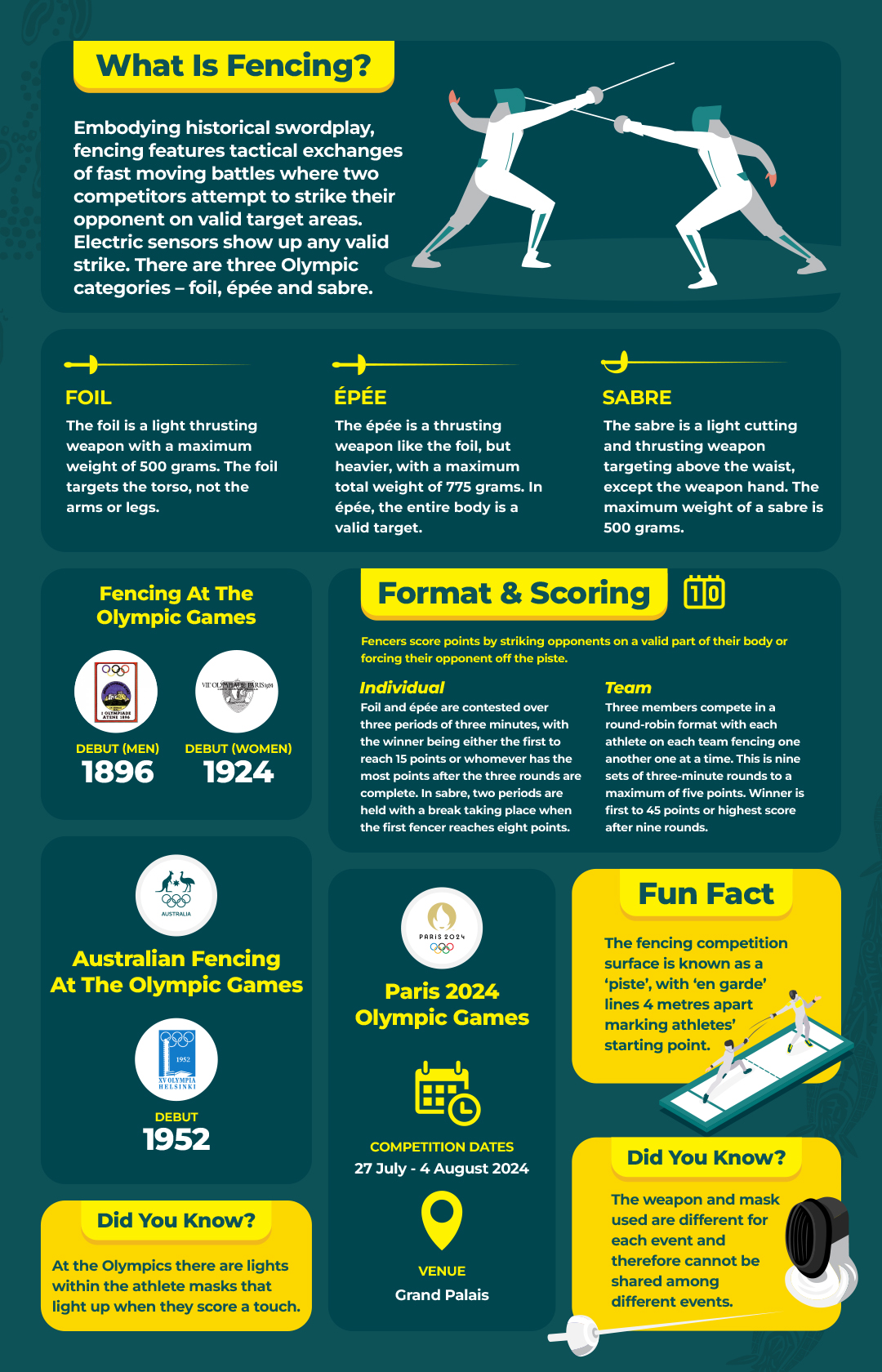
Fencing has been featured in every modern Olympic Games since 1896. At the Tokyo 2020 Games, all 12 events were held — foil, épée, and sabre for both men and women, individual and team.
Australia first competed in Olympic fencing at the 1952 Helsinki Games. While we are yet to win a medal, our fencers have achieved remarkable results on the world stage.
The Sport of Champions
Fencing is one of the original Olympic sports, dating back to the first modern Games in 1896. It is a sport of strategy, speed, and skill — often called "physical chess".
In fencing, two opponents face each other with the goal of scoring points by touching their opponent with their weapon. The three weapons used in modern fencing are Foil, Épée, and Sabre — each with its own rules and target area.
Fencing develops quick thinking, reflexes, balance, coordination, and sportsmanship. It is a lifelong sport that can be enjoyed by people of all ages and fitness levels.
Learn more on Olympics Australia →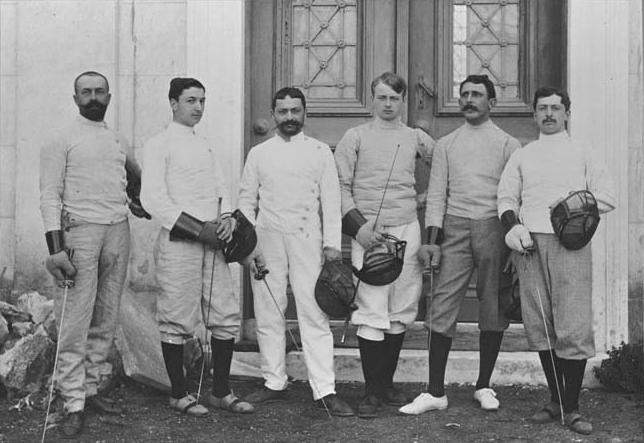
Australian Olympic Fencers
Pioneers who represented Australia on the world stage
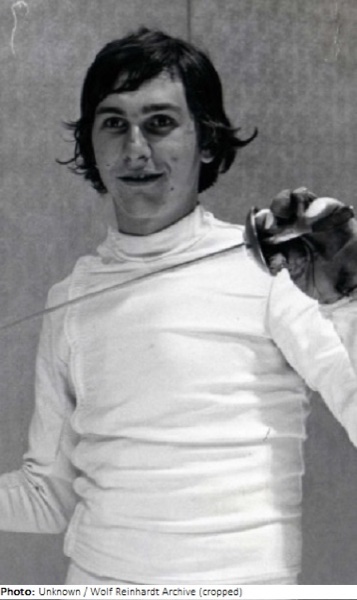
Greg Benko
6th in individual foil — Australia's best-ever Olympic fencing result. Four-time Olympian and 19-time national champion.
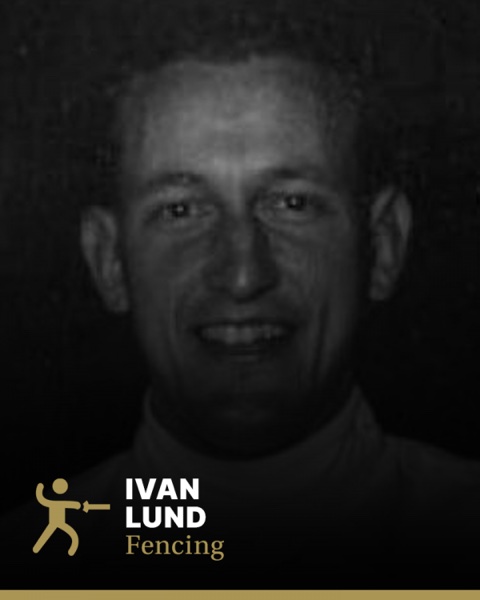
Ivan Lund
Four-time Olympian and Australian flag bearer at Tokyo 1964. Won 13 Commonwealth Games medals. Sport Australia Hall of Fame inductee.
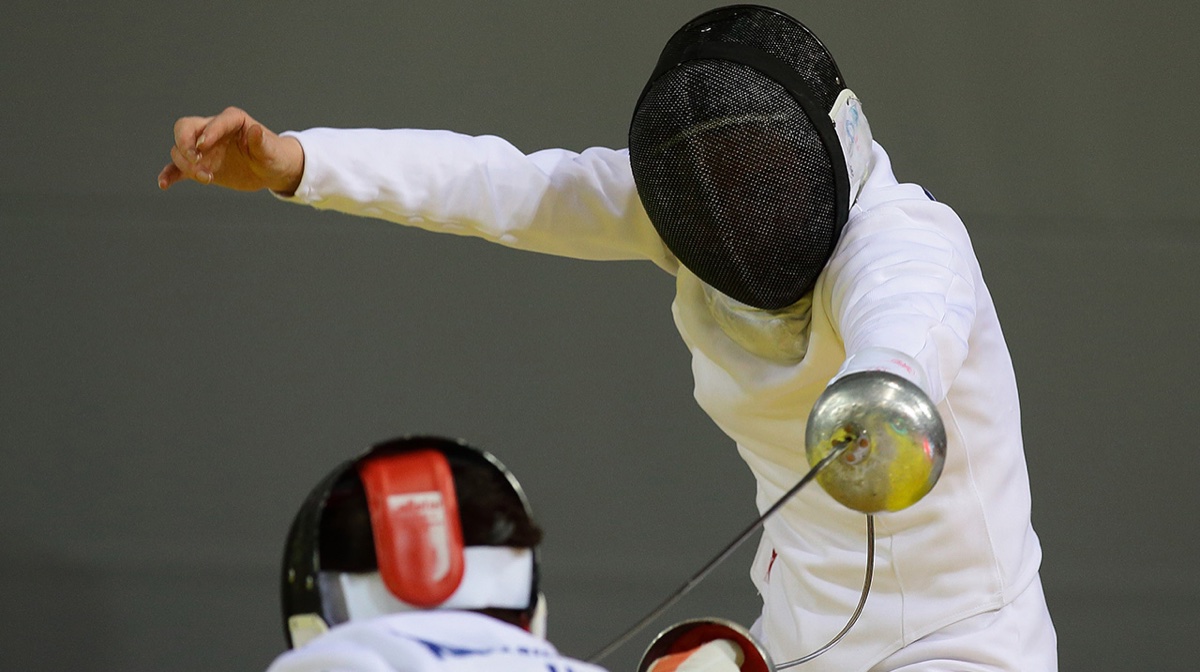
Evelyn Halls
12th in women's épée at Athens 2004 — one of Australia's most recent Olympic fencing representatives.
Learn more about Australian Olympic fencing at Olympics Australia
The Three Weapons
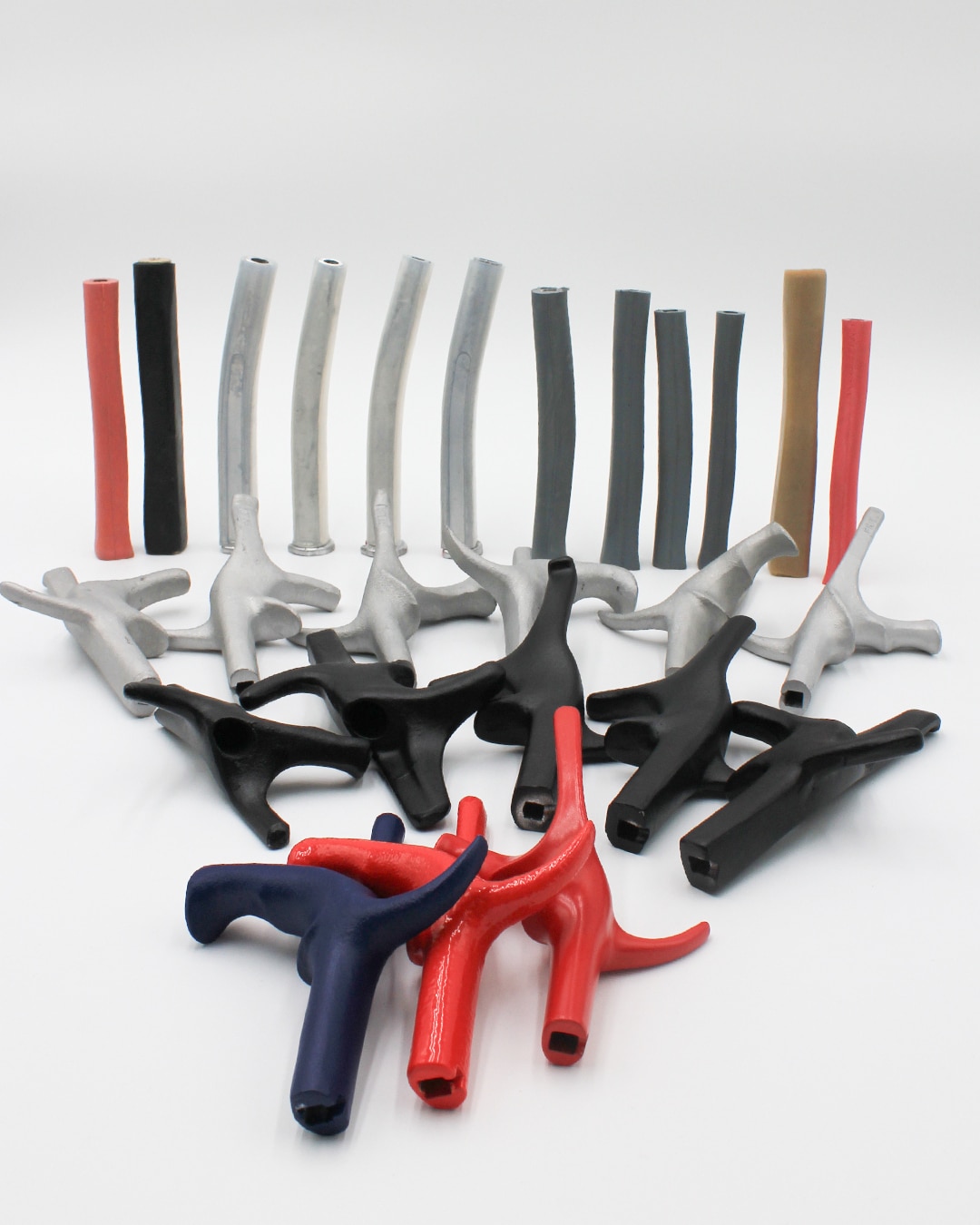
Understanding Grips
The grip is how you hold your weapon — it affects your control, reach, and fighting style. There are two main types:
French Grip — A straight, simple handle. Best for beginners as it teaches proper finger control. Advanced fencers use it for extra reach by holding further back (called "posting").
Pistol Grip — An ergonomic, curved handle that fits naturally in your hand. Provides stronger blade control and leverage for parries and attacks. Most competitive fencers use a pistol grip.
At NQFA, all beginners start with a pistol grip for better control and confidence.
Foil
The foil is a light, flexible weapon. Points are scored by touching the opponent's torso. Foil fencing uses "right of way" rules — the fencer who initiates the attack has priority.
Grips used: Pistol (beginners) and Pistol & French (competitive)
Best for young beginners — Foil is the recommended weapon for children starting out (primary school age).
Épée
The épée is a heavier weapon. The entire body is a valid target. There is no "right of way" — whoever touches first scores the point. Épée requires patience and precision.
Grips used: Pistol (standard) and French (optional for reach advantage)
For teens and adults — Épée is the weapon used by high school, teen, and adult fencers at NQFA.
Sabre
The sabre is a cutting weapon. Points are scored by touching the opponent's upper body. Sabre fencing is fast and explosive, with athletes lunging and slashing at high speed.
Grip: Standard sabre grip only — rubberized or leather-wrapped handle
Fastest weapon — Sabre actions happen in a split second. The explosive speed makes it thrilling to watch.
Benefits of Fencing
🏋️ Fitness
Full-body workout improving strength, endurance, and flexibility.
🧠 Mental Focus
Develop strategic thinking, concentration, and quick decision-making.
🎯 Coordination
Improve balance, reflexes, and hand-eye coordination.
💪 Confidence
Build self-confidence through achievement and competition.